Leave Your Message

China Top 10 Gearbox Manufacturers for Global Buyers?

China has become a major manufacturing base for industrial transmission equipment, including Gearbox products for energy, logistics, mining, and automation. Global buyers now face a crowded supplier landscape. Factory scale alone does not prove engineering quality.

MarketsandMarkets estimates that the industrial gearbox market could grow from about USD 27.8 billion in 2023 to USD 36.6 billion by 2028. Its analysis highlights automation, renewable energy, and material-handling systems as important demand drivers. The U.S. Department of Energy also identifies drivetrain reliability as a key factor in wind-turbine availability. Small design errors can create large maintenance costs.

Performance matters most.

Peter Jamieson, a respected wind-turbine design specialist, has described the gearbox as “one of the most highly loaded components in a wind turbine.” That observation also applies to many heavy-duty industrial applications. Buyers should examine torque ratings, gear materials, heat treatment, bearing quality, sealing design, noise levels, testing records, and after-sales support. A polished catalog is not enough. Ask for load-test evidence, dimensional drawings, failure data, and references from comparable installations.

This guide reviews China’s top 10 Gearbox manufacturers for global buyers. The selection considers manufacturing capability, product range, export experience, certification, customization, and service response. Rankings can never be perfectly objective. Some smaller factories may offer excellent value, while larger brands may provide stronger documentation. Treat this list as a practical starting point, not a final purchasing decision. The best supplier is the one that matches your actual load, speed, environment, and long-term maintenance plan.

China Top 10 Gearbox Manufacturers for Global Buyers?

China’s Gearbox Manufacturing Industry and Global Market Role

China Top 10 Gearbox Manufacturers for Global Buyers?

China’s gearbox manufacturing industry has become a major link in global equipment supply chains. Its factories serve wind power, construction machinery, conveyors, robotics, machine tools, and electric vehicles. The IEA’s Global EV Outlook 2024 reports that China represented about 60% of global electric car sales in 2023. This growth increases demand for compact reduction units, differential systems, and high-efficiency transmission parts.

Renewable energy shows the same influence. According to the Global Wind Energy Council’s Global Wind Report 2024, China installed about 75.9 GW of new wind capacity in 2023, near two-thirds of global additions. Many projects require gearboxes that can manage heavy torque, vibration, dust, and changing temperatures. Buyers should examine load calculations, tooth inspection records, heat-treatment controls, noise data, and spare-parts response times. A low purchase price means little if a damaged unit stops a production line.

The picture is not perfect. Some suppliers still present incomplete fatigue-test results or unclear efficiency figures. This creates avoidable risk for international buyers. Factory audits, sample testing, and contract-based performance limits remain practical safeguards. ISO 9001 certification helps, but it cannot replace process evidence. Buyers should also compare sealing design, bearing sources, lubrication intervals, and traceability from steel batch to final assembly. Small details matter. A gearbox may look identical outside, yet perform very differently under continuous load.

How to Evaluate China’s Top Gearbox Manufacturers

Evaluating China’s Top Gearbox Manufacturers

China’s gearbox sector serves automation, logistics, wind power, and construction equipment. Grand View Research estimates the global gearbox market will grow steadily through 2030, driven by industrial automation and renewable energy. This growth makes supplier selection more demanding. I have learned this the costly way: a polished catalog is not proof of engineering quality.

Check the manufacturer’s design evidence before comparing prices. Ask for rated torque, service factor, efficiency curves, backlash data, noise readings, and thermal limits. These details should match your actual duty cycle, not a laboratory ideal. The U.S. Department of Energy reports that motor-driven systems can consume more than 70% of industrial electricity in some facilities. Small efficiency losses can therefore increase long-term operating costs. Review material certificates, gear measurement records, batch traceability, and documented end-of-line testing. ISO 9001 certification helps, but it does not replace independent audits or sample inspections.

Tips: Request three years of failure and warranty data. Visit the factory, if possible. Watch how technicians measure gears and seal housings. Confirm spare-parts availability, response times, and export documentation. Ask for a pilot batch before signing a large contract. One overlooked issue is communication. A technically capable supplier may still fail when drawings, tolerances, or change approvals are unclear. That uncomfortable detail deserves more attention.

Top 10 Chinese Gearbox Manufacturers for International Buyers

Top 10 Chinese Gearbox Manufacturers for International Buyers

China’s gearbox industry now serves automation, renewable energy, material handling, and heavy equipment markets. Grand View Research estimates the global industrial gearbox market reached about USD 27 billion in 2023. It also projects steady growth through 2030, supported by factory automation and energy investment.

For international buyers, the top ten Chinese gearbox manufacturers should be assessed beyond catalog prices. Check rated torque, reduction ratio, backlash, thermal capacity, sealing design, and documented load testing. A supplier with ISO 9001 certification may offer stronger process control, but certification alone proves little. Request inspection records, material certificates, noise data, and failure-rate evidence.

Look closely at export experience. Reliable manufacturers usually provide multilingual drawings, IEC-compatible motors, traceable spare parts, and clear warranty terms. The China Machinery Industry Federation reports that China remains a major global producer of industrial equipment, giving local gearbox makers broad machining and casting capacity. Yet quality can vary between factories. That is the uncomfortable part. Some suppliers advertise impressive efficiency figures without explaining test conditions.

Ask for a sample unit.

A practical audit should include factory visits, sample disassembly, and a comparison under identical loads. Intertek and SGS testing can add independent evidence, especially for large international projects. Buyers should also examine delivery records, packaging quality, corrosion protection, and technical response times. The cheapest quotation may become expensive after alignment problems, oil leakage, or delayed replacement parts.

Product Categories, Industries Served, and Technical Strengths

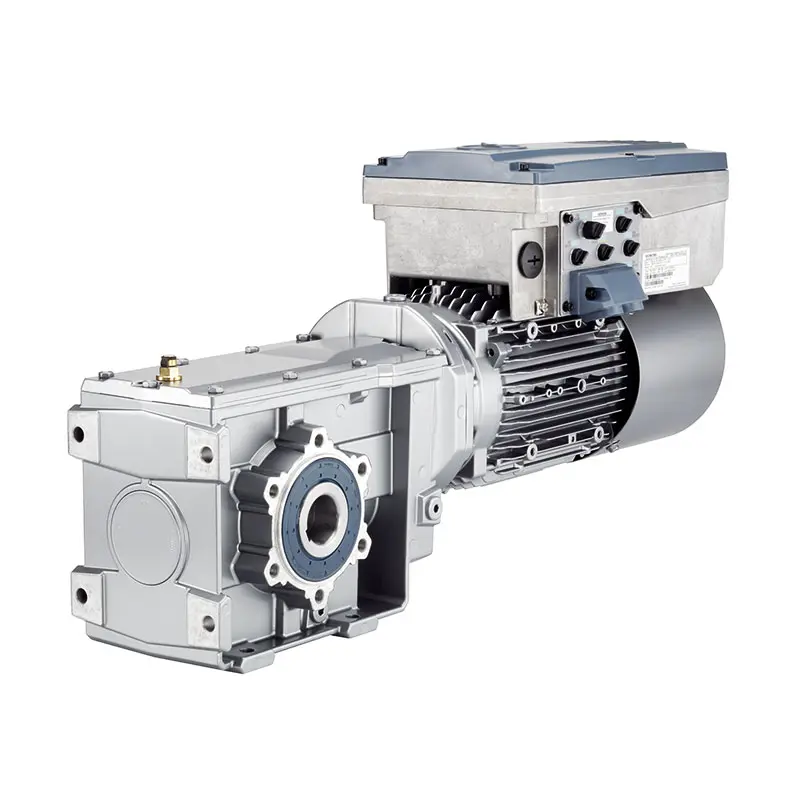
China’s gearbox manufacturing base covers planetary, helical, bevel, worm, cycloidal, and harmonic designs. According to Grand View Research, the global industrial gearbox market was valued at over USD 28 billion in 2023. Demand remains strong in material handling, renewable energy, robotics, mining, and factory automation.

Different industries require different performance. Conveyor systems often use helical or bevel-helical units for continuous torque. Wind equipment needs large planetary stages, precise tooth geometry, and reliable lubrication. Robotics depends on low backlash, compact housing, and repeatable positioning. The International Federation of Robotics reported more than 500,000 industrial robot installations globally in 2023, increasing demand for precision reduction systems.

Technical strength is not just machining accuracy. Leading Chinese manufacturers commonly use carburized alloy steel, computer-aided load analysis, and production testing under heat and vibration. Many products are designed against ISO 6336 or AGMA calculation principles. Some suppliers also provide custom shaft layouts, hollow bores, brake interfaces, and food-grade lubrication options. Useful details matter.

Buyers should inspect test records, noise limits, sealing design, and spare-parts availability. A polished catalog proves little. I would also question unclear efficiency figures and unsupported service-life claims. Some factories offer excellent value, yet documentation can remain inconsistent. That weakness deserves attention before a large international order.

Export Capabilities, Quality Standards, Pricing, and Supplier Selection

China Top 10 Gearbox Manufacturers for Global Buyers?

For global buyers, export capability starts with more than production capacity. A reliable gearbox supplier should provide clear quotations, packing details, lead times, and shipping documents. Ask whether the factory regularly handles your destination market. Experience with customs procedures can prevent costly delays. Request sample commercial invoices and inspection records before placing a large order. Small details matter.

Quality should be checked through measurable evidence. Look for ISO 9001 systems, material traceability, load testing, noise control, and documented inspection procedures. Confirm the gearbox’s torque rating, ratio accuracy, thermal limits, and expected service life. A factory tour, live video audit, or independent inspection can reveal production habits. Certificates alone are not enough. That lesson is easy to miss.

Pricing requires a wider view than the unit figure. Compare machining quality, bearings, oil seals, spare parts, packaging, warranty terms, and after-sales support. A low quote can look attractive. I have seen buyers save five percent initially, then lose weeks because replacement parts were unclear. Ask for a total landed-cost estimate, including freight, duties, testing, and installation support. Supplier selection should also consider communication speed and technical English. One imperfect drawing can create a serious mismatch. Use a signed specification sheet, define acceptance criteria, and keep every revision traceable. A practical trial order is often safer than choosing the largest catalog.

China Top 10 Gearbox Manufacturers for Global Buyers? - Export Capabilities, Quality Standards, Pricing, and Supplier Selection
Anonymous Supplier Profile Primary Gearbox Categories Typical Application Sectors Export Capability Common Quality Standards Typical Annual Capacity Indicative MOQ Typical Lead Time Indicative Export Price Range Warranty Practice Buyer Suitability Evaluation Score
Profile 01 Helical, bevel-helical, and parallel-shaft gearboxes Conveyors, material handling, packaging, general industrial machinery Regular export shipments to Europe, Southeast Asia, the Middle East, and North America ISO 9001-based quality systems; dimensional inspection; gear accuracy commonly verified to ISO 1328 or equivalent Approximately 20,000–60,000 units 1–5 standard units; 10–20 customized units 25–45 days after drawing and specification approval US$180–8,500 per unit 12–24 months for manufacturing defects Industrial OEMs seeking a broad standard product range 9.1/10
Profile 02 Worm, helical-worm, and compact inline gearboxes Small conveyors, food-processing equipment, access systems, light automation Suitable for distributors and small-batch international orders; export packaging typically available ISO 9001-based processes; leakage testing; torque and noise checks on selected production batches Approximately 40,000–120,000 units 5–20 standard units 15–35 days for standard models US$35–1,200 per unit 12 months, subject to installation and lubrication requirements Importers prioritizing competitive pricing and short lead times 8.7/10
Profile 03 Planetary, servo, and precision reduction gearboxes Robotics, CNC machinery, semiconductor equipment, precision automation Strong technical-export capability with drawing review, application engineering, and documentation support ISO 9001; controlled backlash measurement; torque, efficiency, and runout testing; traceable inspection records Approximately 8,000–30,000 units 1–3 prototype units; 5–10 production units 35–70 days depending on ratio, backlash, and mounting requirements US$450–12,000 per unit 12–24 months with commissioning conditions clearly defined Buyers requiring low backlash, repeatability, and technical customization 9.3/10
Profile 04 Heavy-duty helical, bevel, and shaft-mounted gearboxes Mining, cement, steel, bulk handling, crushers, and heavy conveyors Experienced in project exports, seaworthy packing, spare-parts planning, and field-service coordination ISO 9001; load testing; material certificates; gear inspection; optional conformity documentation for destination markets Approximately 3,000–12,000 units 1 engineered unit or project-based order 45–90 days, excluding final engineering approval US$2,500–35,000 per unit 12–24 months; extended service packages may be negotiated Project buyers needing high torque, durability, and lifecycle support 9.0/10
Profile 05 AC and DC motor-integrated geared motors Warehouse automation, conveyors, logistics systems, ventilation, and machine tools Regular container and consolidated shipments with multilingual product documentation ISO 9001; motor efficiency testing; insulation and temperature-rise testing; export electrical documentation commonly available Approximately 25,000–80,000 units 5–10 standard units; 20–50 units for customized motor combinations 20–45 days US$120–3,800 per unit 12 months standard; longer coverage may depend on order quantity System integrators looking for matched motors and gearboxes 8.9/10
Profile 06 Custom planetary and cycloidal gear reducers Construction equipment, renewable-energy systems, mobile machinery, and industrial automation Project-oriented exports with engineering calculation, sample approval, and customized interface support ISO 9001; fatigue and load calculations; material traceability; dimensional and backlash inspection Approximately 5,000–20,000 units 1 prototype unit; 3–10 production units 40–85 days US$700–18,000 per unit 12–24 months based on operating hours and service conditions OEMs needing application-specific torque density and geometry 9.2/10
Profile 07 Small precision spur, helical, and planetary gearboxes Medical equipment, laboratory devices, compact actuators, and instrumentation Small parcel and air-freight export support; prototype communication usually available ISO 9001-based production; dimensional control; noise, vibration, and endurance testing for selected models Approximately 10,000–50,000 units 1–10 prototype or standard units 30–60 days US$80–2,500 per unit 12 months, with acceptance criteria specified in the purchase order Development teams and buyers with low-to-medium annual demand 8.6/10
Profile 08 Stainless-steel and hygienic worm or helical gearboxes Food processing, beverage filling, pharmaceuticals, and clean manufacturing Export-ready product documentation; hygienic surface and corrosion-resistance options commonly offered ISO 9001; surface-finish inspection; sealing and leakage tests; destination-specific food-contact documentation should be verified Approximately 6,000–25,000 units 2–10 standard units 30–60 days US$250–5,500 per unit 12 months, excluding damage caused by chemicals or improper cleaning Buyers requiring corrosion resistance and washdown compatibility 8.8/10
Profile 09 Right-angle, bevel, and compact gearboxes for automation Robotic cells, packaging lines, indexing systems, and automated assembly Supports international technical communication, sample validation, and distributor-based after-sales service ISO 9001; backlash and efficiency checks; mounting accuracy inspection; optional test reports by order Approximately 12,000–45,000 units 1–5 samples; 10–25 production units 25–55 days US$300–7,500 per unit 12–24 months depending on operating profile Automation buyers balancing precision, availability, and cost 9.0/10
Profile 10 Standard modular gearboxes and replacement units Maintenance, repair, aftermarket replacement, agricultural machinery, and general equipment High suitability for mixed-SKU orders, distributor programs, and regular sea-freight replenishment ISO 9001-based manufacturing; standard dimensional inspection; batch testing and spare-parts identification commonly available Approximately 50,000–150,000 units 10–50 standard units 15–40 days for stocked or semi-standard models US$60–2,800 per unit 12 months for standard products Distributors prioritizing product breadth, stock availability, and price 8.5/10
Note: The figures above are indicative industry benchmarks for anonymous supplier profiles, not quotations or verified data for any named company. Buyers should confirm certification scope, test reports, production capacity, Incoterms, payment terms, warranty conditions, and final pricing directly with each shortlisted manufacturer.